
Can You Get a Spray Tan With Eczema? What to Know Before Your Appointment

If you have eczema, you may be wondering whether you can still get a spray tan—and whether the tanning solution will look even on areas where your skin tends to become dry or irritated.
The answer depends largely on the current condition of your skin and the spray tan solution being used.
Someone whose eczema is calm and well-managed may have a very different experience from someone experiencing an active flare-up with red, cracked, peeling, or irritated skin.
Eczema can also create dry patches that may affect how evenly a sunless tan develops. That's why it's important to look at the condition of your skin before your appointment rather than treating eczema like ordinary dry skin.
At BlushTan San Diego, we recommend letting your spray tan technician know about areas of concern before your application. If your eczema is actively flaring, broken, or being medically treated, talk with your dermatologist or healthcare professional about what's appropriate for your skin.
How Can Eczema Affect a Spray Tan?
Sunless tanning solution develops color in the outermost layers of your skin.
Eczema can affect the condition and texture of those layers. Depending on your skin, eczema-prone areas may be:
Very dry
Flaky or scaly
Red or irritated
Cracked
Rougher than surrounding skin
Healing from a recent flare
These differences can affect how tanning solution develops and eventually fades.
For example, very dry patches may develop differently from smoother surrounding skin. As dry or flaky skin sheds, the tan can also appear less even in those areas.
This is primarily a cosmetic concern, but active irritation raises a separate question about whether you should be applying tanning products to the affected skin at all.
Can You Spray Tan During an Eczema Flare-Up?
This is where we'd be cautious.
If you're experiencing an active eczema flare—particularly if your skin is raw, cracked, open, weeping, significantly inflamed, or painful—postponing your spray tan may be the better choice.
A spray tan is cosmetic. There's no reason to compromise already irritated skin simply to keep a tanning appointment.
If you're uncertain about applying cosmetic products to an active flare, ask your dermatologist or healthcare professional before your appointment.
Once the flare has settled and your skin has returned closer to its normal condition, you can reconsider your spray tan.
Will Spray Tan Look Darker on Eczema Patches?
It can develop differently on very dry or textured areas.
Dry skin doesn't always interact with tanning solution exactly like well-hydrated, smooth skin. That can sometimes make dry patches appear darker, less even, or simply different from the surrounding area.
This doesn't mean you should aggressively exfoliate eczema patches before your appointment.
In fact, trying to scrub away dry skin immediately before a spray tan could make already sensitive skin more irritated.
The priority is healthy skin first and an even tan second.
Should You Exfoliate Eczema Before a Spray Tan?
Don't aggressively exfoliate an eczema-affected area just to prepare for a spray tan.
BlushTan normally recommends appropriate skin preparation before tanning, but eczema requires a more individualized approach.
If you have an exfoliation or skincare routine recommended by your dermatologist, follow that guidance rather than introducing a harsh scrub because you have a tanning appointment coming up.
For unaffected areas of your body, you can follow your normal spray tan preparation routine.
Read our complete guide to what to do before a spray tan for general preparation recommendations.
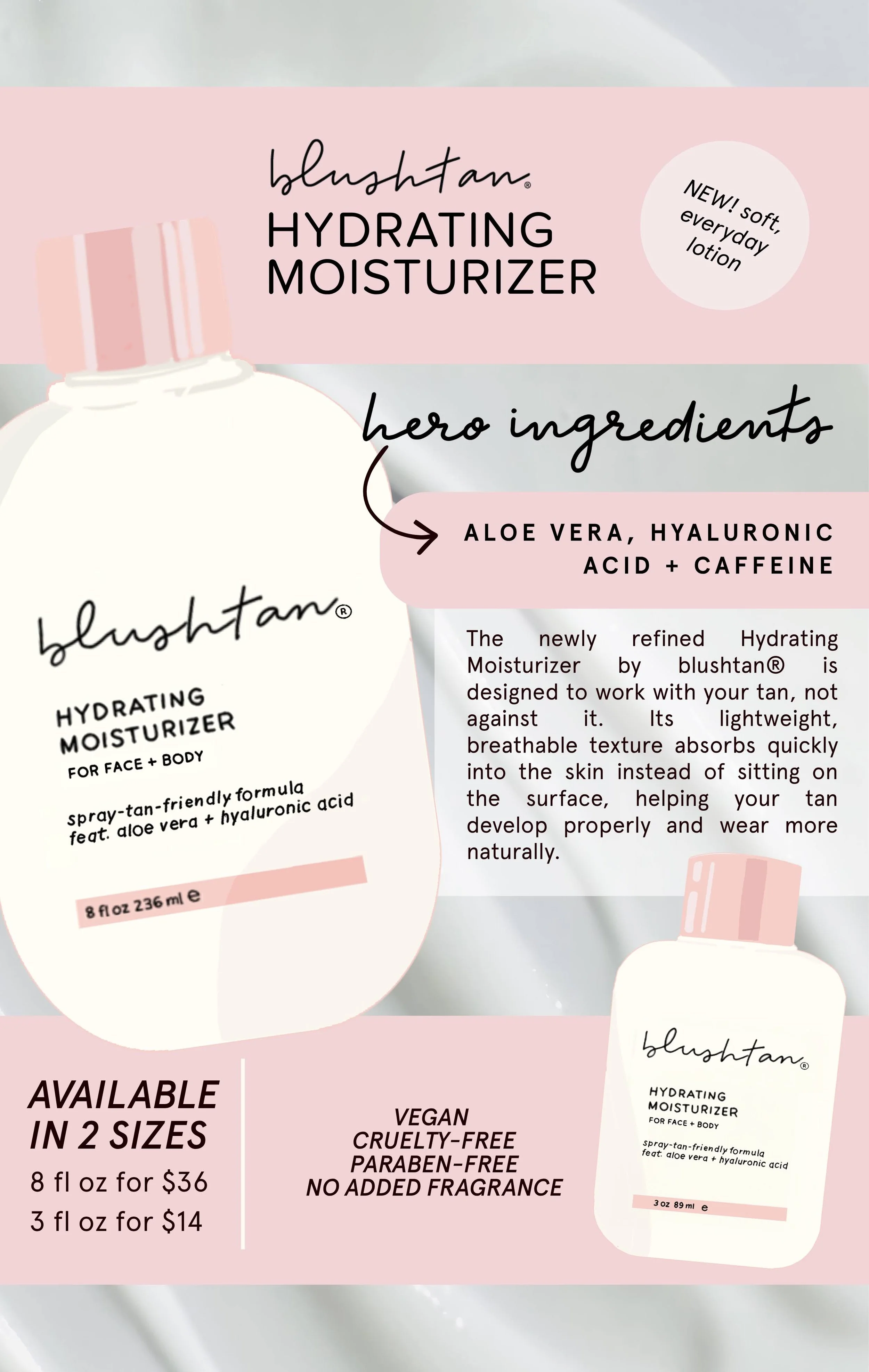
Should You Moisturize Eczema Before a Spray Tan?
This requires some planning.
Eczema-prone skin often needs moisturizing, but applying a heavy cream, ointment, or oil immediately before a spray tan could affect how the tanning solution contacts your skin.
At the same time, you shouldn't stop a dermatologist-recommended skincare routine simply to prepare for a cosmetic tan.
If you regularly use an eczema moisturizer, medicated cream, ointment, or another topical treatment, ask the healthcare professional managing your eczema if you're unsure about changing when or how you use it.
Then let your spray tan technician know about any areas where you've applied products.
What About Prescription Eczema Creams?
Continue to follow the directions provided by the healthcare professional who prescribed or recommended your treatment.
Don't discontinue or change a prescription treatment simply because you're getting a spray tan.
Some people with eczema use prescription creams or other topical treatments, and the condition of the treated skin can vary significantly.
BlushTan can advise you about the cosmetic tanning process, but questions about how a prescription treatment should be used around cosmetic products are better answered by your dermatologist, pharmacist, or prescribing healthcare professional.
Can You Spray Tan Over Healed Eczema?
If an eczema flare has settled and the skin is intact, you may be able to return to your usual spray tanning routine.
However, an area that recently flared may still be drier or have a different texture from the surrounding skin.
Tell your spray tan technician where you typically experience eczema so they can take the condition of your skin into account during your appointment.
Don't expect a spray tan to conceal eczema completely. Sunless tanning changes the color of the outer skin; it isn't a treatment for eczema or a substitute for skincare.
What If You Have Eczema and Generally Sensitive Skin?
These are related concerns, but they're not exactly the same topic.
Eczema is a specific inflammatory skin condition, whereas someone can have generally sensitive or reactive skin without having eczema.
If your primary concern is how your skin reacts to tanning products rather than an eczema flare, read our guide to spray tanning for sensitive skin.
That guide discusses considerations such as tanning formulas, patch testing, gentle preparation, and sensitive-skin aftercare. The existing BlushTan guidance specifically recommends gentle exfoliation rather than harsh scrubbing for sensitive skin.
For eczema specifically, the bigger question is what condition your eczema-affected skin is in on the day of your appointment.
Should You Patch Test a Spray Tan If You Have Eczema?
If you have concerns about how your skin may react to a tanning solution, discuss them with BlushTan before your appointment.
The existing BlushTan sensitive-skin guidance recommends considering a patch test for people with a history of skin reactions.
However, a patch test shouldn't be applied to actively broken or irritated eczema simply to see what happens.
If you're concerned about an allergic reaction or whether a cosmetic ingredient is appropriate for your eczema, consult your dermatologist or another qualified healthcare professional.
Can a Spray Tan Treat or Hide Eczema?
No. A spray tan is a cosmetic service and does not treat eczema.
It also shouldn't be relied upon to conceal an active flare.
Depending on your skin tone, the location of the eczema, and the condition of the affected area, tanning may actually make differences in color or texture more noticeable.
The best approach is to prioritize getting your skin comfortable and under control first.
When Should You Postpone Your Spray Tan?
Consider postponing your appointment if your eczema-affected skin is:
Actively inflamed, cracked, open, weeping, painful, significantly peeling, or unusually irritated.
You should also consider postponing if you're experiencing an unexplained skin reaction or a significant change in your normal eczema symptoms.
If you're uncertain, contact the healthcare professional managing your eczema before applying a cosmetic tanning product.
There will always be another opportunity to get a spray tan.
Preparing for Your BlushTan Appointment With Eczema
If your eczema is currently calm and you're planning a spray tan, preparation doesn't need to become complicated.
Continue following the skincare guidance appropriate for your eczema, avoid aggressively exfoliating affected areas, and tell your spray tan technician about any patches you're concerned about.
Most importantly, don't change a medically recommended skincare or medication routine solely to accommodate a spray tan.
Your skin comes first.
Custom Spray Tanning in San Diego
Eczema doesn't look the same on everyone, which is why there isn't a one-size-fits-all answer to spray tanning with eczema.
If your skin is calm and intact, talk with your BlushTan technician about your concerns before your application. If you're experiencing an active flare, significant irritation, broken skin, or you're unsure how your eczema treatment interacts with cosmetic products, talk with your dermatologist or healthcare professional first.
BlushTan San Diego provides customized airbrush spray tanning at locations in Bankers Hill, La Jolla, and Encinitas.
Explore our spray tanning services or schedule your next custom airbrush tan.
Real people. Real ingredients. Fake tans.™

FAQs
Can you get a spray tan if you have eczema?
It depends on the current condition of your skin. If your eczema is calm and your skin is intact, you may be able to get a spray tan. If you're experiencing an active flare with broken, cracked, weeping, or significantly irritated skin, consider postponing and asking your dermatologist or healthcare professional for guidance.
Will spray tan stick to eczema patches?
Very dry, flaky, or textured areas may develop tanning color differently from the surrounding skin, potentially creating an uneven appearance.
Can I spray tan during an eczema flare-up?
It's better to be cautious with an active flare, particularly when skin is broken, raw, weeping, painful, or significantly inflamed. Consider postponing the cosmetic service until your skin has settled.
Should I exfoliate eczema before a spray tan?
Don't aggressively exfoliate eczema-affected skin simply to prepare for a spray tan. Follow the skincare or exfoliation recommendations appropriate for your eczema, particularly if you've received guidance from a dermatologist.
Should I stop using eczema cream before a spray tan?
Don't stop or change a prescribed or medically recommended eczema treatment solely because you're getting a spray tan. If you're unsure about timing a topical medication or treatment around your appointment, ask the healthcare professional who recommended it.